
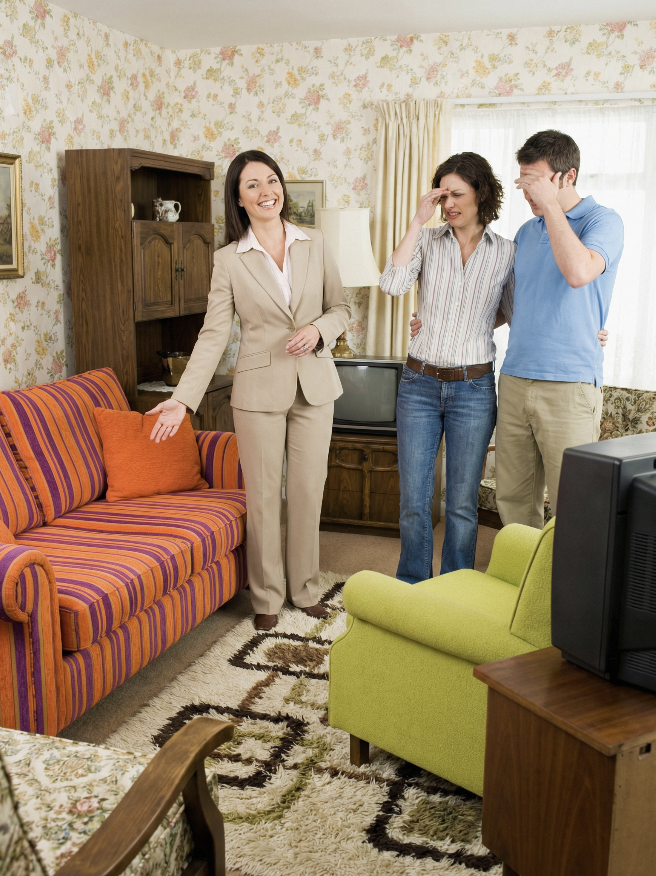
When potential buyers walk through a property, they’re not just evaluating square footage and location.
They’re experiencing an emotional journey, and every visual element either pulls them toward a purchase decision or pushes them away.
This phenomenon, known as visual friction, is one of the most powerful yet underestimated forces in real estate sales.
What Is Visual Friction?
Visual friction refers to the cognitive and emotional resistance buyers experience when they encounter elements in a property that interrupt their ability to envision themselves living there. It’s the mental “speed bump” that occurs when something doesn’t quite look right, feel cohesive, or align with their expectations of a home.
Think of it like browsing a website with broken images, confusing navigation, or cluttered design. You might abandon it within seconds. The same principle applies to home buying. When buyers encounter visual friction, they disengage emotionally, making it harder for them to form the critical connection needed to make an offer.
Common sources of visual friction include:
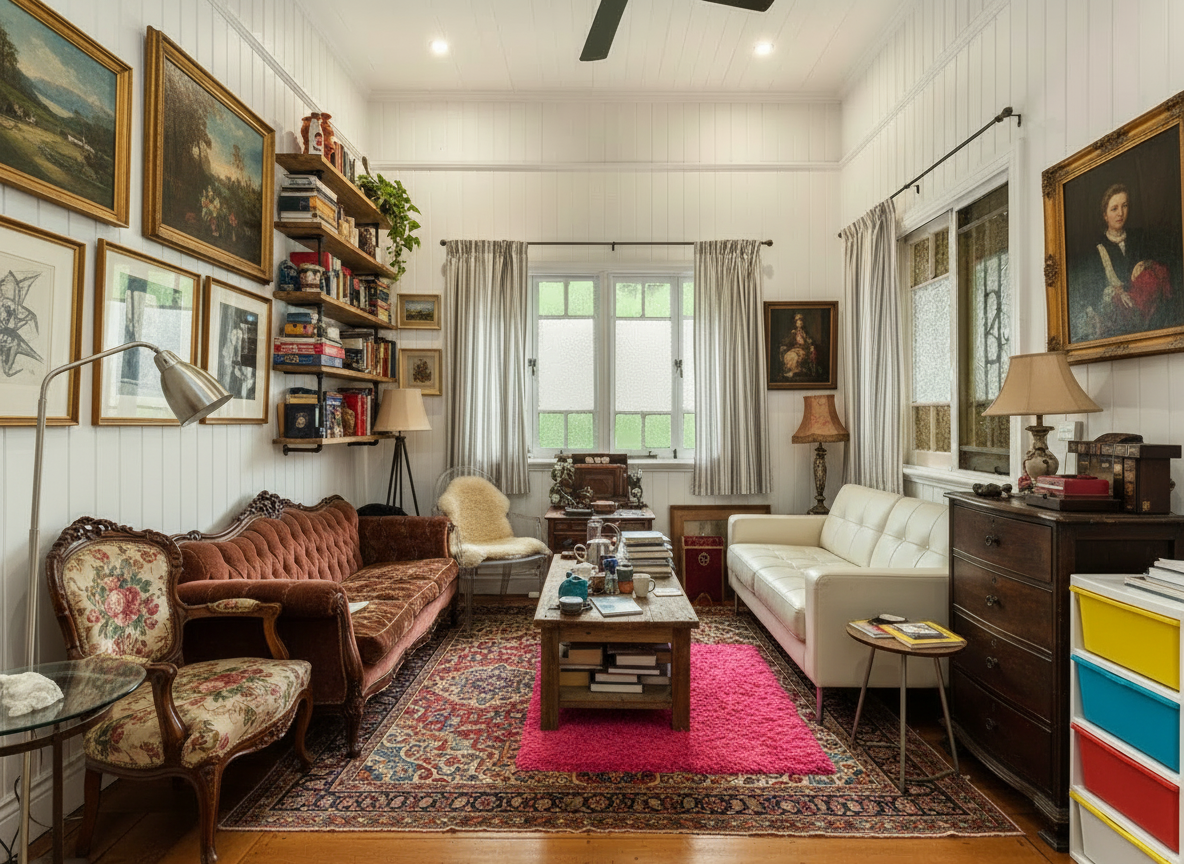
- Clutter and personal items that make spaces feel smaller and prevent buyers from imagining their own belongings
- Outdated or mismatched furniture that draws attention to what needs replacing rather than the home’s potential
- Empty rooms that feel cold, lack scale reference, and leave buyers uncertain about functionality
- Bold or unusual colour schemes that distract from architectural features and create polarising reactions
- Poor lighting that makes spaces feel unwelcoming or smaller than they actually are
- Lack of clear purpose for rooms, leaving buyers confused about how to use the space
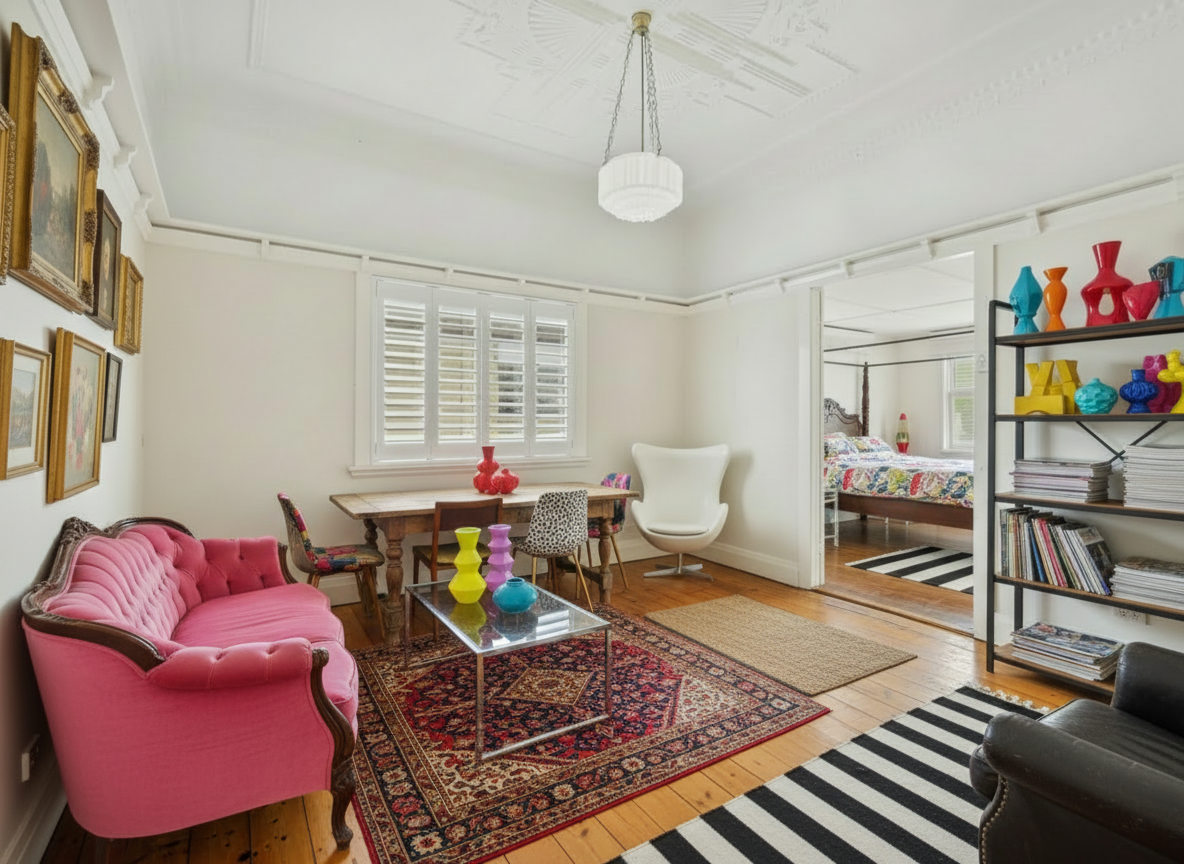
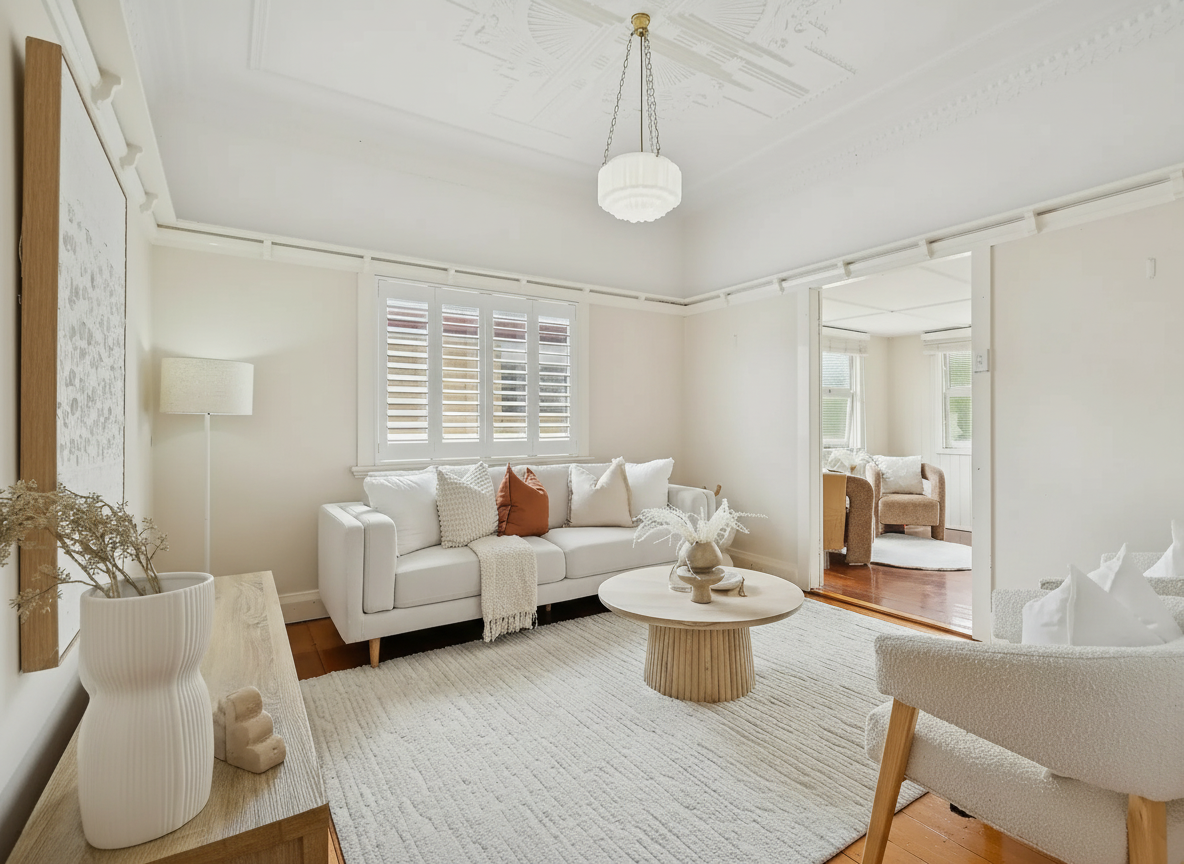
The Cost of Visual Friction
Visual friction doesn’t just slow down the sales process; it directly impacts your bottom line. Properties with high visual friction typically experience:
Longer time on market: Buyers struggle to connect emotionally, leading to fewer serious offers and extended listing periods.
Lower sale prices: When buyers can’t envision themselves in a space, they’re less likely to see its full value, resulting in lower offers or more aggressive negotiations.
Reduced buyer pool: Properties with visual friction appeal to fewer buyers, as most people lack the vision to see past clutter, poor presentation, or empty rooms.
Negative online impressions: In today’s digital-first market, listing photos with visual friction get fewer clicks, saves, and showings, meaning your property never gets a fair chance.
How Property Staging Eliminates Visual Friction
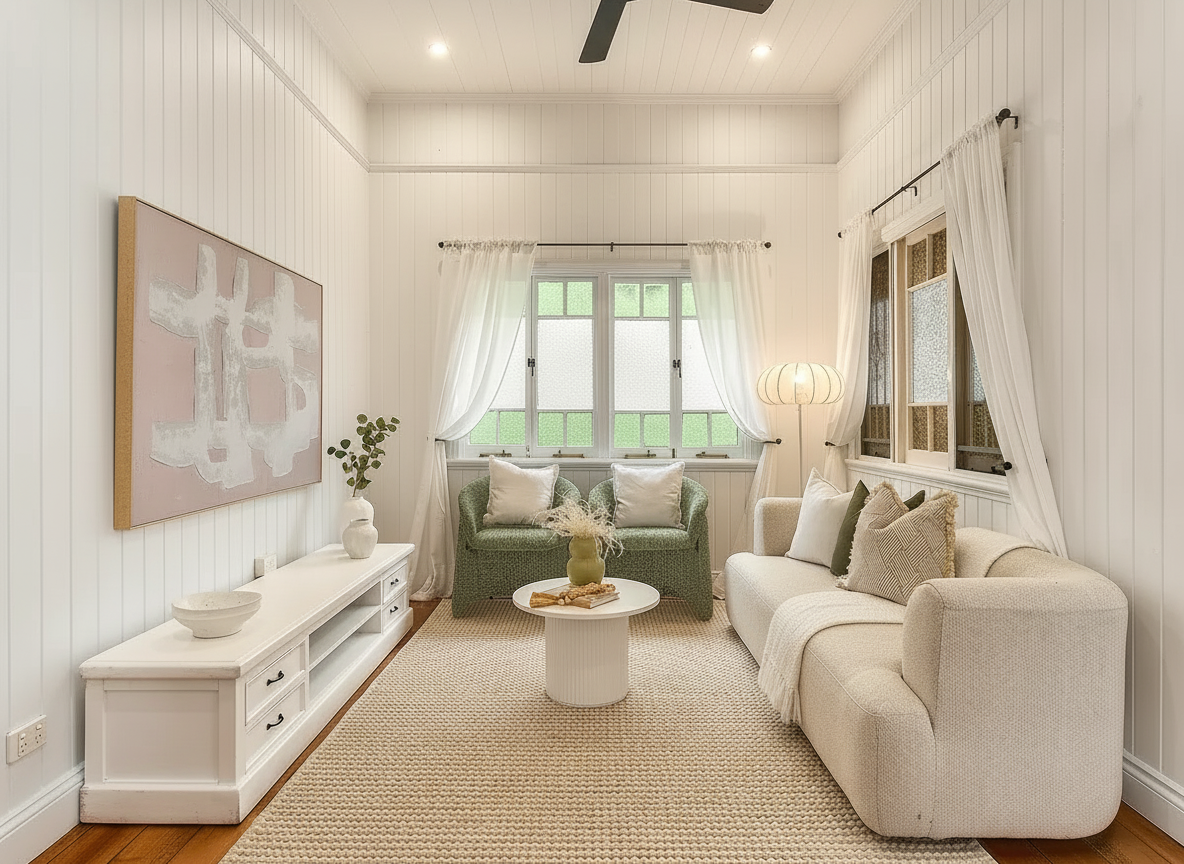
Property staging is the strategic art and science of reducing visual friction to create a seamless buyer experience. Professional stagers understand that selling a home isn’t about showcasing your lifestyle, it’s about allowing buyers to envision their own.
Creating Visual Flow
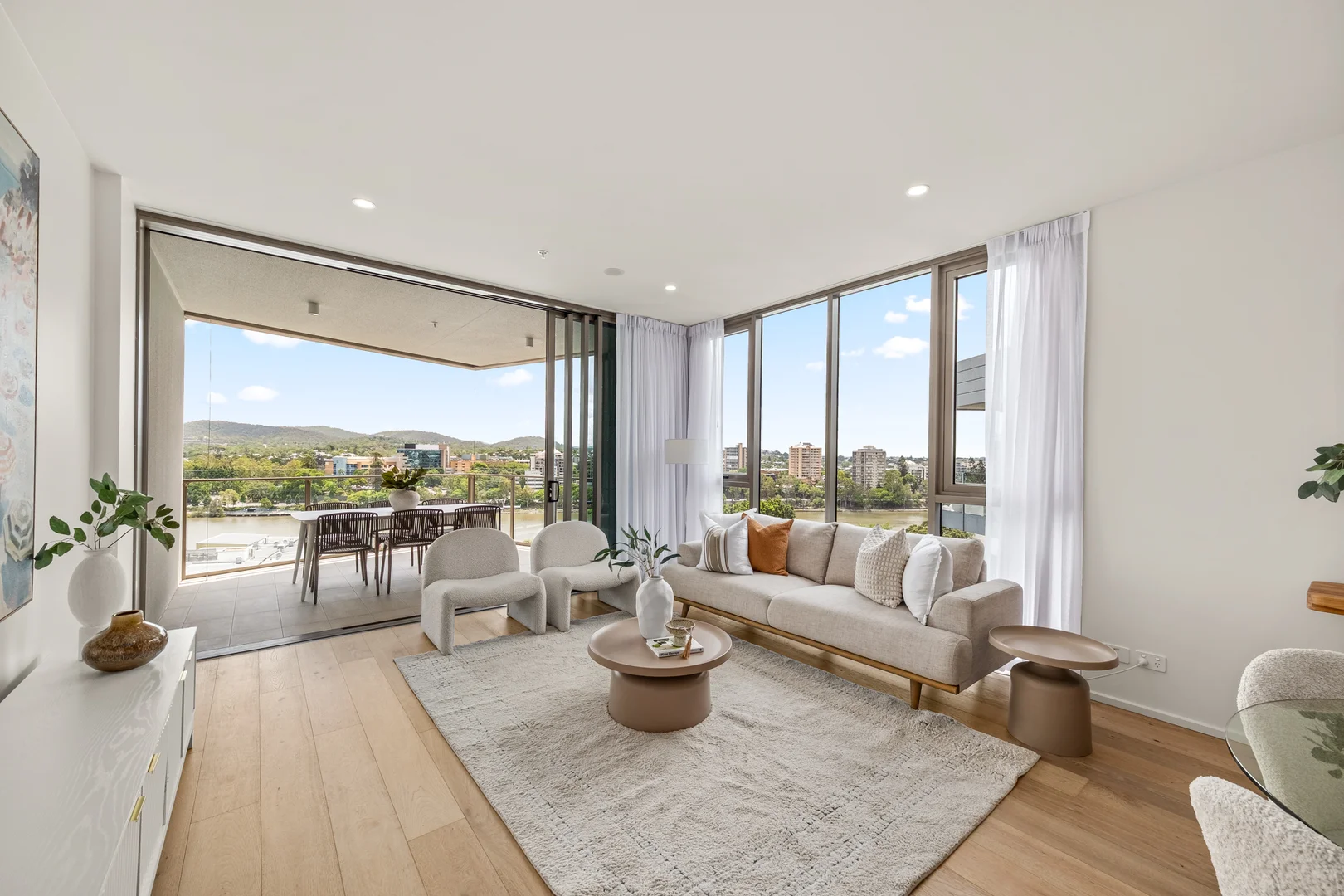
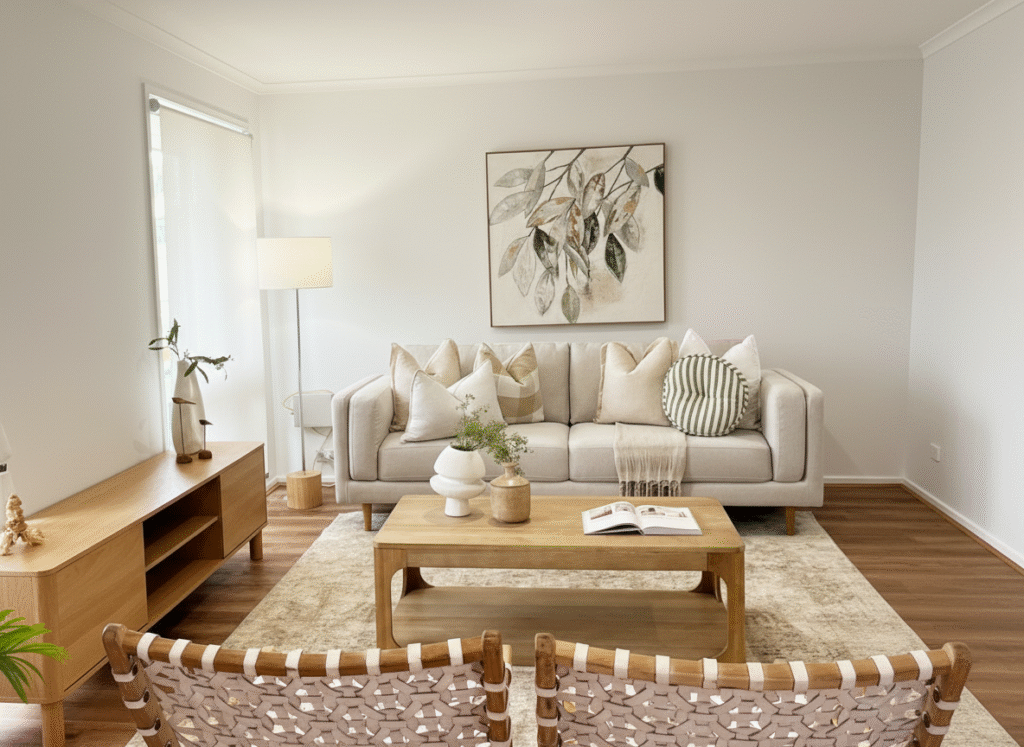
Staged homes guide the eye naturally through each space. Furniture placement creates clear pathways, draws attention to focal points like fireplaces or windows, and establishes a logical flow from room to room. This eliminates the confusion and hesitation that comes from awkward layouts or unclear functionality.
Establishing Scale and Purpose
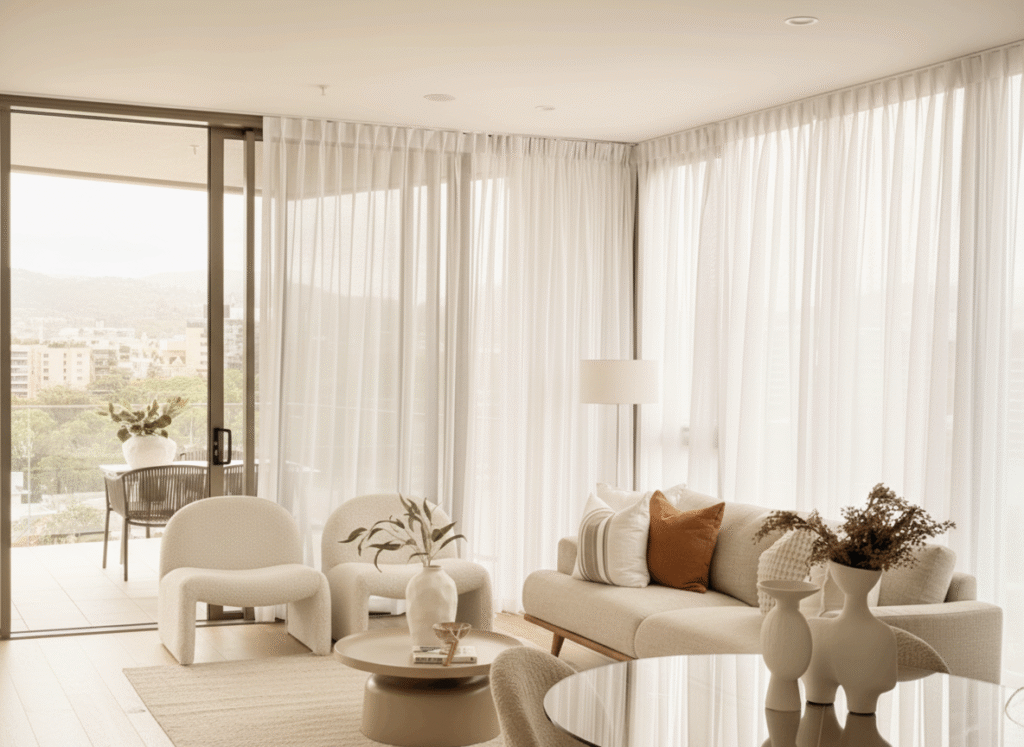
Empty rooms are deceptive. That spacious master bedroom might actually feel small and unwelcoming without context. Staging provides scale references that help buyers understand room dimensions and envision how their own furniture might fit. It also clearly defines the purpose of each space, eliminating questions like “Is this a bedroom or an office?”
Neutralising & Broadening Appeal
Professional staging removes polarising elements and replaces them with universally appealing design choices. Neutral colour palettes, contemporary furnishings, and carefully curated décor appeal to the widest possible audience while still maintaining warmth and personality. The goal isn’t to create a bland space, it’s to create a canvas where any buyer can imagine their own story unfolding.
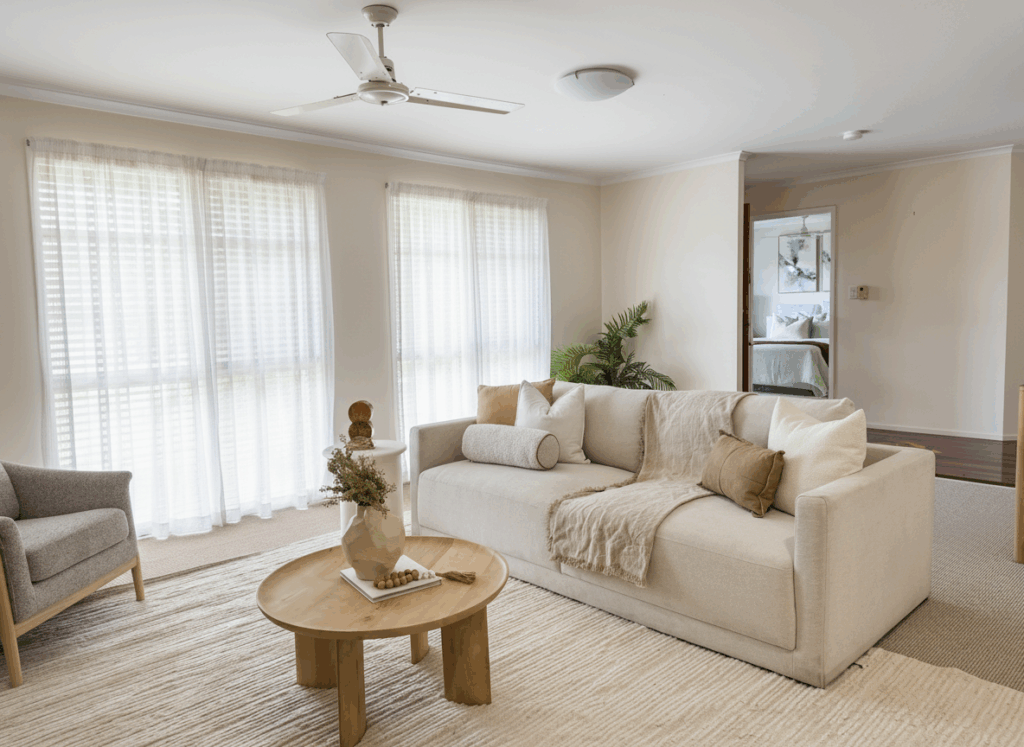
Highlighting Strengths, Minimising Weaknesses
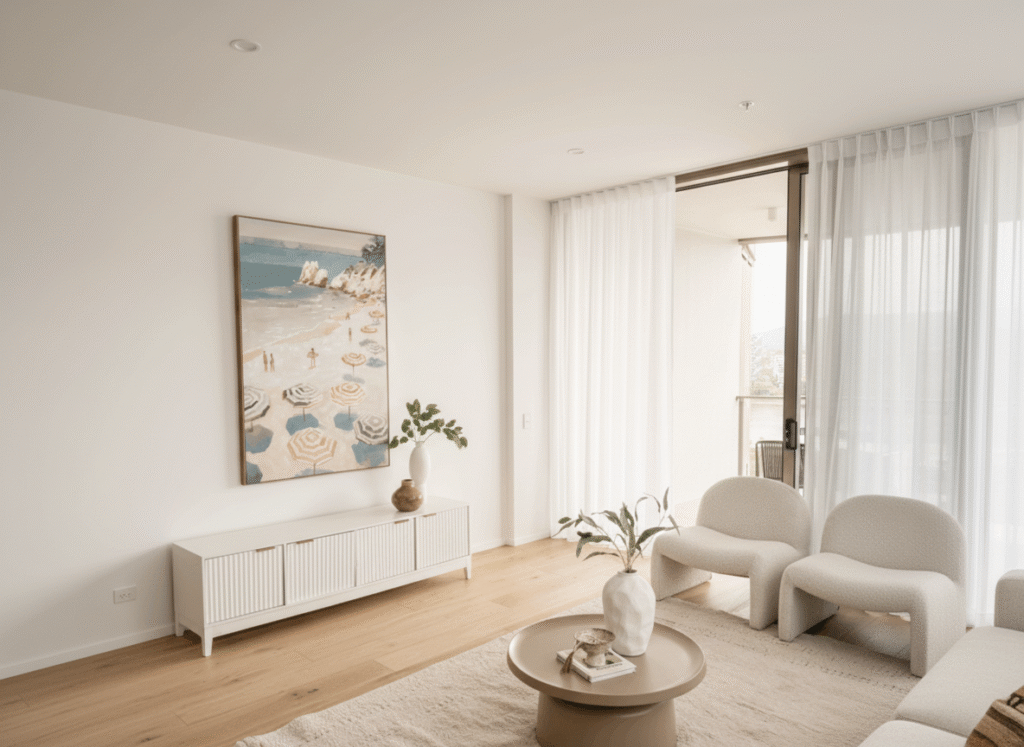
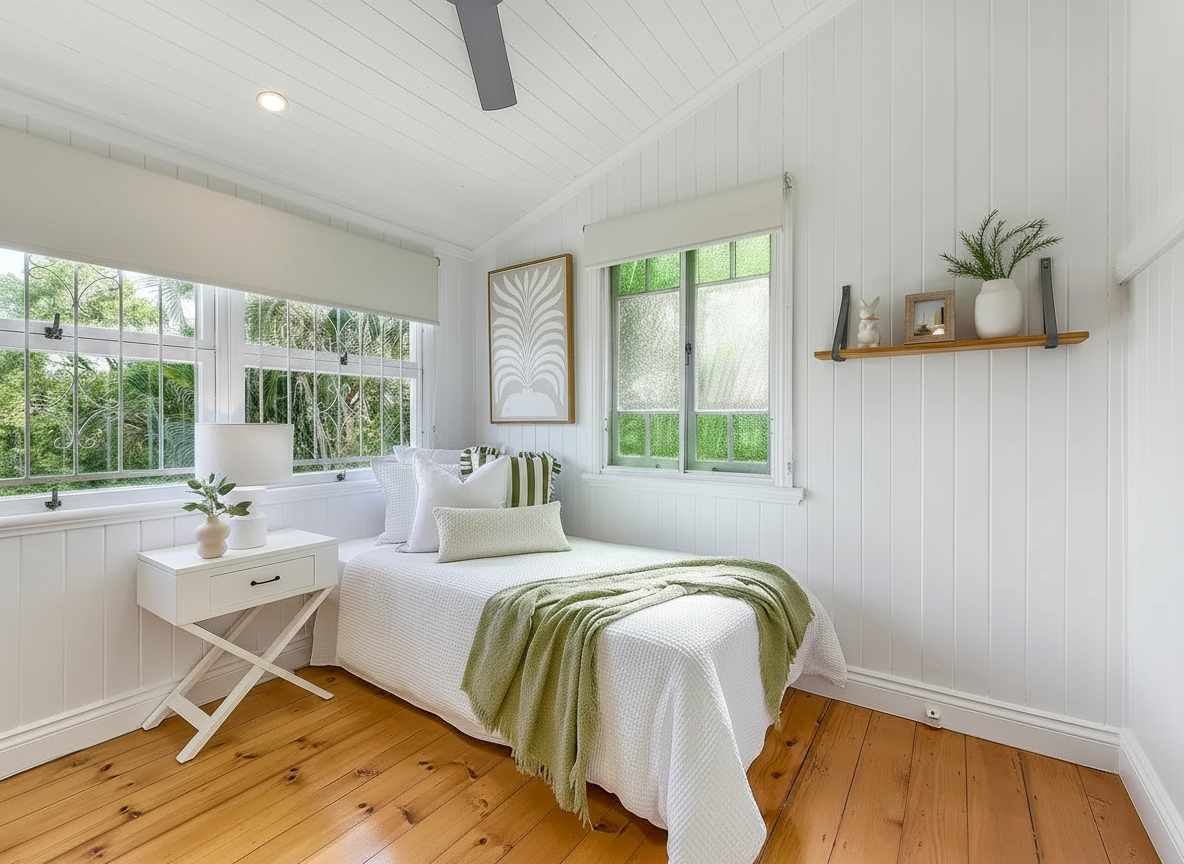
Skilled stagers know how to draw the eye toward a property’s best features, architectural details, natural light, beautiful views, while subtly downplaying less desirable aspects. Strategic furniture placement can make a small room feel more spacious or an awkwardly shaped room feel more functional.
Creating Emotional Connection
Perhaps most importantly, staging transforms a house into a lifestyle aspiration. Through carefully chosen furnishings, textures, and accessories, stagers create spaces that evoke positive emotions: comfort, sophistication, warmth, and possibility. When buyers feel something, they remember it, and they’re far more likely to make an offer.
The Numbers Don’t Lie
The National Association of Realtors consistently reports that staged homes sell faster and for more money than their non-staged counterparts. According to recent data:
- 82% of buyer’s agents said staging made it easier for buyers to visualise the property as their future home
- Staged homes spend 73% less time on the market on average
- The median dollar amount spent on staging is just 1% of the home’s asking price, yet it can yield a 5-15% increase in sale price
These statistics reflect the tangible impact of reducing visual friction. When buyers can effortlessly imagine themselves in a space, they move from browsing to buying.
Not All Staging Is Created Equal
While DIY staging can help reduce some visual friction, professional staging takes it to another level. Professional stagers bring:
- Market expertise to understand what buyers in your specific area and price point are looking for
- Design knowledge to create cohesive, magazine-worthy spaces that photograph beautifully
- Inventory access to high-quality, on-trend furniture and décor that may not be available to homeowners
- Objective perspective to see the property through buyers’ eyes rather than the emotional lens of ownership
The Bottom Line
In real estate, first impressions happen in seconds, both online and in person. Visual friction is the invisible barrier that can prevent buyers from seeing past surface-level obstacles to recognise a property’s true value and potential.
Property staging isn’t an expense; it’s an investment in removing that barrier. By creating spaces that are visually seamless, emotionally engaging, and universally appealing, staging allows buyers to focus on what really matters: imagining their future in your home.
In a competitive market where buyers have countless options, the properties that sell quickly and for top dollar are those that make the buyer’s journey as frictionless as possible. That’s not just good design, it’s good business.